Airbag Light On: Read the Lamp, Check Your VIN, Then Decide
What the warning light's startup behavior can tell you, what it cannot, and the free federal check to run before you pay for a diagnosis.
The short answer
Your owner's manual treats the airbag (SRS) warning light as a system check with a small set of meaningful outcomes:
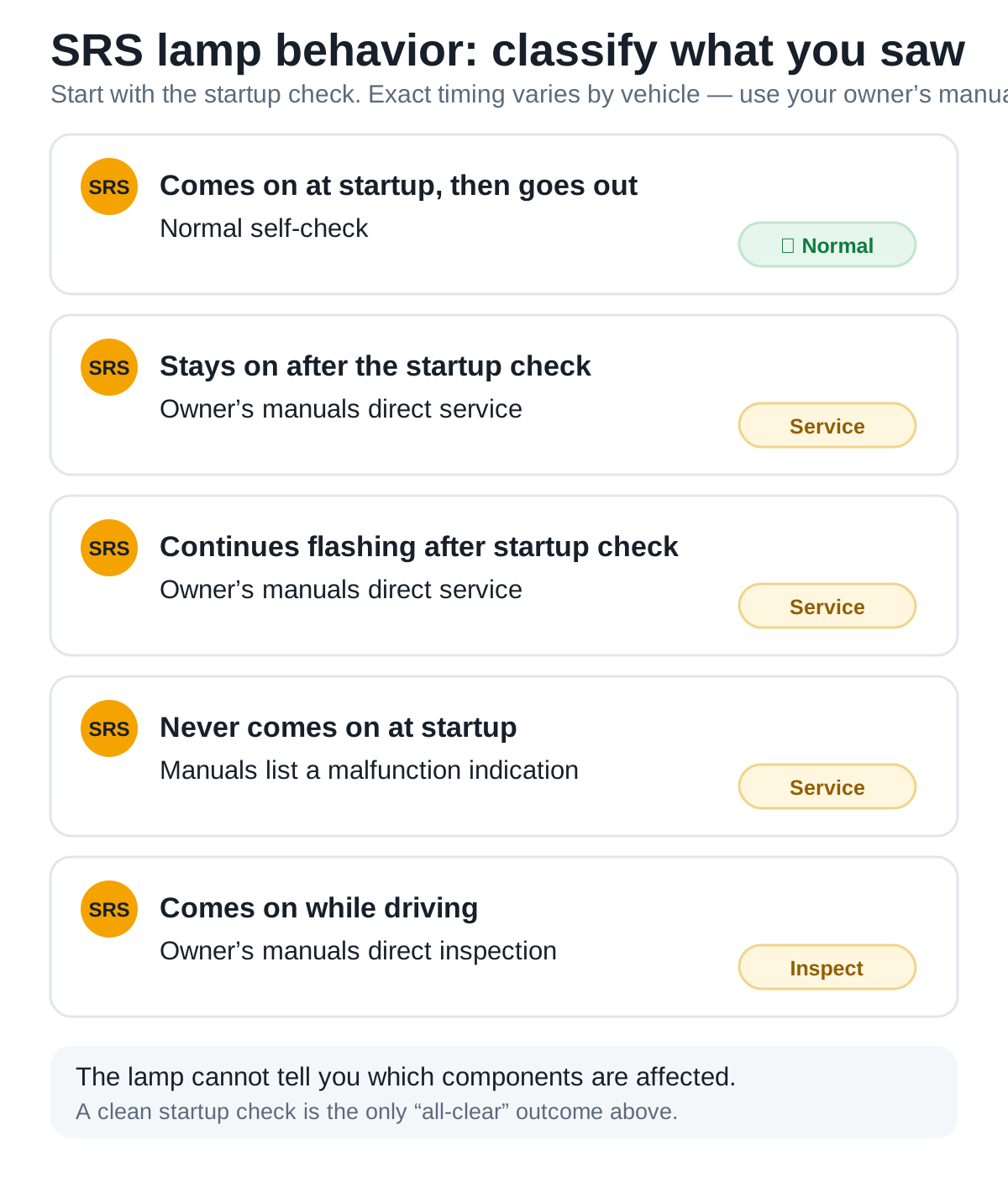
- The light comes on when you start the car and then goes out: the manual's definition of a normal check.
- It stays on, continues to flash after the startup check, never comes on at all, or comes on while driving: the manuals list each of these as a condition indicating a system difficulty that needs service. While that condition is present, the airbag system and/or the seat-belt pretensioners may not function properly, or may not deploy as intended.
- No owner's manual and no federal source we checked sets a safe distance, speed, or time for driving with this light on. The manuals' instruction is service — "immediately" or "as soon as possible," depending on the manufacturer.
- Before paying for diagnosis, run your VIN through NHTSA's free recall lookup. An open safety recall can mean a free dealer remedy. A clean result does not clear the warning light.
Everything below is the evidence behind those four sentences, branch by branch.
Start with what you actually saw
When you turn the ignition on (or press the start button), the SRS warning light is supposed to illuminate briefly while the restraint system checks itself, then go out. Nissan's current Rogue manual states the normal case plainly: after the startup illumination, when the warning light turns off, "this means the system is operational." Other manufacturers describe the same check without a universal number — the exact behavior for your vehicle is in your owner's manual, and that is the reference this page uses.
Now classify what you observed:
- Light came on at startup, then went out: Normal self-check. The system reports operational.
- Light stays on after the startup check: A difficulty with the system. Service is directed.
- Light continues to flash after the startup check: Listed by manufacturers (Nissan, Ford, Mazda among them) as a fault indication requiring service.
- Light never came on during startup at all: Listed as a malfunction indication — the warning system itself is not confirming it works.
- Light came on while you were driving: A fault condition that appeared during operation; manufacturers direct inspection.
For all four abnormal outcomes, the manuals converge on the same consequence wording and the same action. Ford's current F-150 manual: "Unless serviced, the system may not function properly in the event of a crash," and "If any of these things happen, even intermittently, have the supplemental restraint system serviced immediately." Honda's wording: have the system checked by a dealer "as soon as possible" — otherwise "your airbags and seat belt tensioners may not work properly when they are needed."
What the light cannot tell you
The light is a warning, not a diagnosis. From the light alone, you cannot determine:
- Which components are affected. The manuals speak of the airbag system and/or the pretensioners. The lamp does not tell you whether one circuit or the whole system is involved.
- Whether anything still works. The manuals' claim is "may not function properly." No manual we opened supports "the airbags are off," "the system is disabled," or "the airbags will not deploy" as a general statement about a lit warning light. Anyone quoting you total disablement from the light alone is going further than the manufacturers do.
- How severe it is relative to another car. The manuals do not rank a flashing light as more dangerous than a steady one, or one lamp color as worse than another. No such gradient exists in the official text.
- Why it happened. This page deliberately does not list causes, fault codes, or tests. The light tells you a condition exists; finding the cause is the service appointment's job.
Can you keep driving?
Here is everything the evidence supports, and where it stops:
- Owner's manuals direct prompt service — Ford and Toyota say "immediately"; Nissan, Honda, and Mazda say "as soon as possible." (The manufacturers' own sentences are quoted in the first section.)
- No verified authority establishes a universal safe distance, speed, or time for driving with the SRS warning light on. Not the manuals, and not NHTSA — NHTSA publishes no consumer guidance on this warning light and refers owners to their manuals.
- The absence of a "stop" order in the manuals is not a driving permission. The manuals give an inspection instruction, not a driving rule. The honest summary: while the light indicates this condition, the restraint system may not function properly, and no official source will tell you how many miles of that risk are acceptable.
This section covers the warning light only. A crash in which airbags deployed, smoke or fire, or visible vehicle damage is a different situation and is not addressed by anything on this page.
Check your VIN before you pay for a diagnosis
There is one official step you can complete yourself, for free — and it can change where this problem gets fixed:
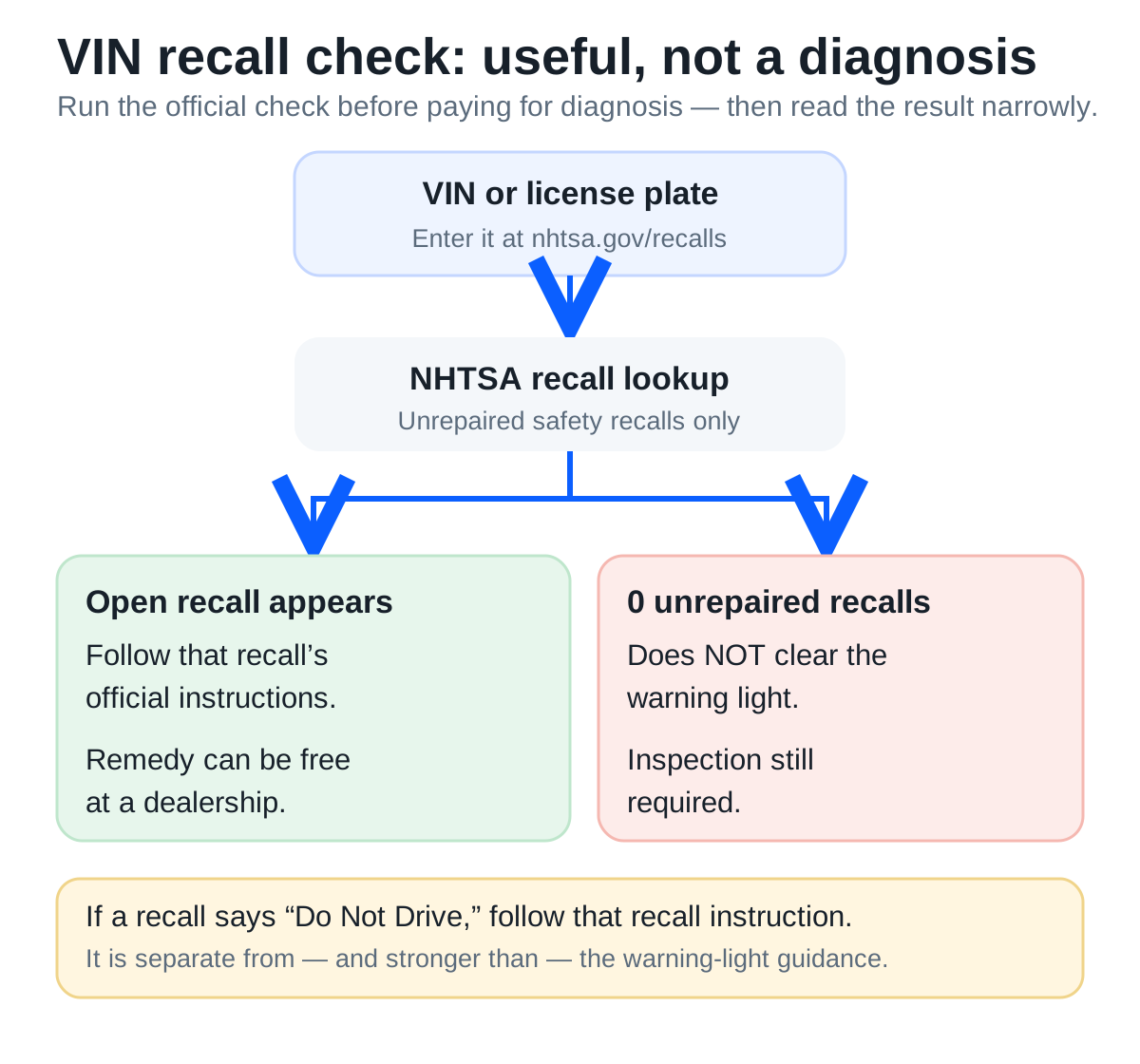
- Find your 17-character VIN (driver's side dashboard, visible through the windshield, or on your registration/insurance documents). NHTSA's lookup also accepts a license plate.
- Go to nhtsa.gov/recalls and enter it.
- Read the result for what it is — and is not.
If an open safety recall appears: follow that recall's official instructions. NHTSA states that open recalls are repaired for free at a dealership. If the recall itself carries a "Do Not Drive" instruction (NHTSA maintains such warnings for certain vehicles with unrepaired Takata airbag recalls), that instruction is separate from the warning light, stronger than anything on this page, and must be followed on its own terms.
What the lookup actually covers, in NHTSA's own framing: unrepaired safety recalls. It does not show recalls already repaired, safety recalls more than 15 years old (with some manufacturer exceptions), or non-safety manufacturer campaigns. It is a recall check — not a diagnostic test of your warning light. NHTSA does not connect a recall result, in either direction, to why your light is on.
If the result says "0 unrepaired recalls": that is a statement about recall records only. A clean VIN result does not clear the warning light; the warning condition still requires inspection. Do not let a clean lookup talk you out of the service the manuals direct.
If the light never comes on at startup
This branch deserves its own section because it is easy to misread as "no warning, no problem." The manuals say the opposite. Ford's manual lists "the readiness light will not illuminate immediately after you switch the ignition on" as one of the indications of "a difficulty with the system." Toyota: if the SRS warning light does not come on when you start the vehicle, "these systems are not available to help protect you in an accident," and the vehicle should be inspected immediately. Nissan lists "the supplemental air bag warning light does not come on at all" among the conditions under which the systems "need servicing."
What you may conclude: the warning system has not confirmed it can warn you, and the manuals classify that as a malfunction condition. What you may not conclude from the observation alone: why it happened. The observation cannot say, and this page will not guess.
This matters most in one common situation: buying a used car. Make the startup check part of your inspection. If the SRS light never performs its startup illumination, or stays on, treat it as an unresolved warning condition to have inspected — not as a clean bill of health because "no light is showing."
Don't confuse it with the passenger airbag status light
Many vehicles have a second, separate indicator: the front passenger airbag status light (often showing "PASS AIR BAG OFF" or similar). It is not the SRS warning light. Ford's manual describes it as a status indicator — located in the overhead console on the F-150 — that illuminates to show whether the front passenger frontal airbag is enabled or disabled based on the passenger sensing system. Nissan similarly places its front passenger air bag status light outside the instrument cluster (on the map light in the Rogue) and states that if a malfunction occurs in the front passenger air bag system, it is the supplemental air bag warning light in the gauges that illuminates.
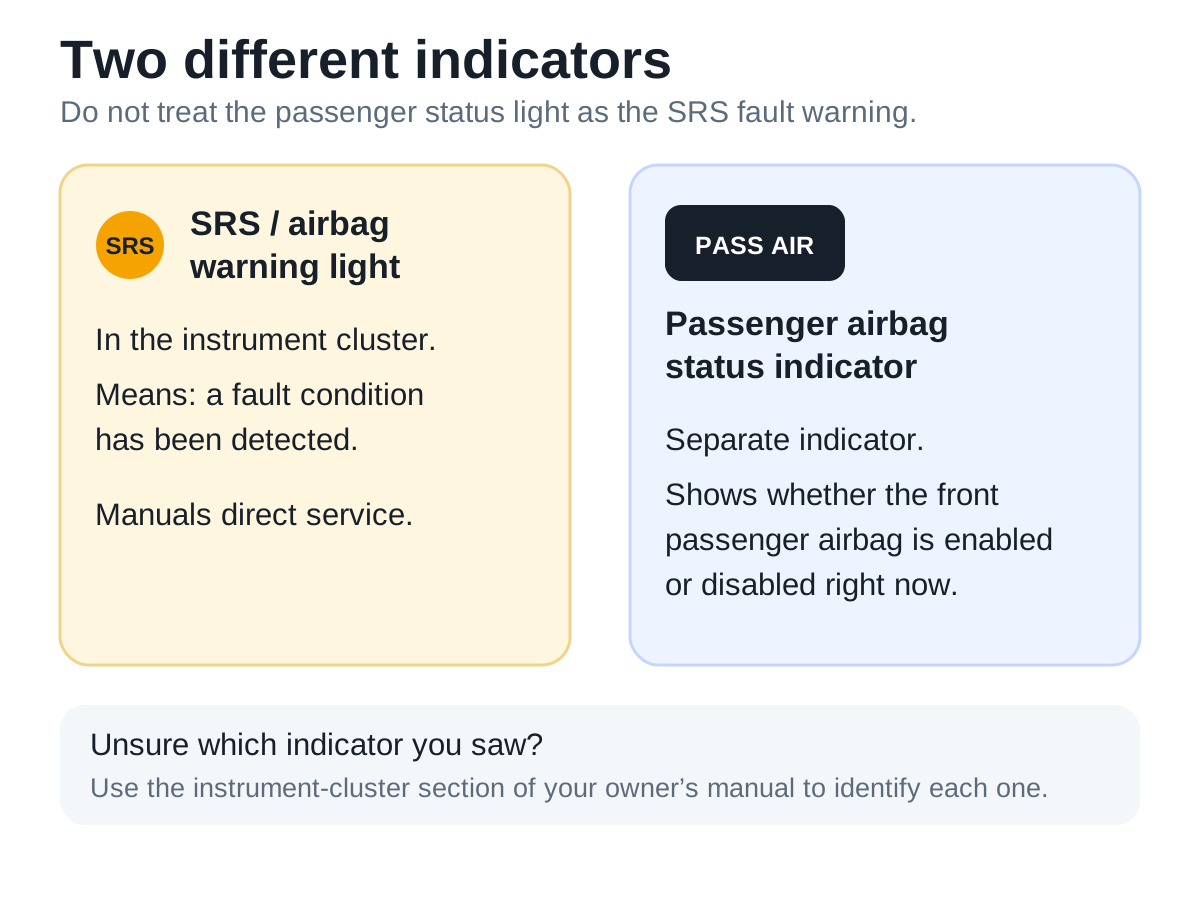
Both indicators light briefly at startup to confirm they work. Put simply: the status light answers "is the front passenger airbag enabled right now?"; the SRS warning light answers "has a fault been detected?" If you are unsure which light you are looking at, your owner's manual's instrument-cluster section identifies each one.
What this page will not tell you to do
The restraint system contains pyrotechnic components. This page contains no instructions for clearing codes, operating scanners, counting flashes, disconnecting batteries, handling seat connectors or wiring, or touching airbag or pretensioner components — and it never will. Nissan's manual notes the systems "must be checked and repaired"; Ford's is bluntest: "Do not attempt to repair or service the system. Take your vehicle in for service immediately." Clearing a warning is not a repair; the warning exists because a condition was detected.
Your job as the driver is the three steps this page covers: observe the light, check the VIN, and get the inspection the manuals direct.
FAQ
Is it safe to drive with the airbag light on?
No manual or federal source we checked says that it is, and none sets a safe distance, speed, or time. The manuals direct service — immediately or as soon as possible — because the airbag system and/or pretensioners may not function properly while the condition is present.
My VIN shows an open airbag recall. Does that explain the light?
No source we checked says that. The recall lookup reports unrepaired recalls; it does not diagnose your warning light. Follow the recall's instructions (the remedy is free at a dealership), and the warning condition still requires inspection.
The lookup says "0 unrepaired recalls." Does that mean my airbag system is fine?
No. It means no unrepaired safety recalls are associated with your VIN, within the lookup's stated limits (it excludes repaired recalls, older recalls beyond its coverage window, and non-safety campaigns). It says nothing about a current warning-light condition.
Will my car fail a state safety inspection with this light on?
Requirements vary by state. Check your own state's inspection rules; this page does not generalize them.
Sources
Every safety claim, quotation, and recall statement in this article traces to an official manufacturer or government source:
- Nissan Rogue Owner's Manual (2025) — Supplemental Air Bag Warning Light — Normal startup check ("This means the system is operational"), remains-on/flashes/never-on service triggers, "may not operate properly," "must be checked and repaired." nissanusa.com (https://www.nissanusa.com/content/dam/Nissan/us/manuals-and-guides/rogue/2025/2025-nissan-rogue-owner-manual.pdf)
- Ford F-150 Owner's Manual (2024) — Crash Sensors and Airbag Indicator — Readiness light will not illuminate / flashes or stays on; "serviced immediately"; "may not function properly in the event of a crash"; passenger airbag status indicator distinction. fordservicecontent.com (https://www.fordservicecontent.com/Ford_Content/Catalog/owner_information/2024_Ford_F-150_Owners_Manual_version_1_om_EN-US.pdf)
- Honda Insight Owner's Manual (2021) — SRS Indicator — "If the indicator comes on at any other time, or does not come on at all, have the system checked by a dealer as soon as possible… your airbags and seat belt tensioners may not work properly when they are needed." owners.honda.com (https://owners.honda.com/utility/download?path=/static/pdfs/2021/Insight/2021_Insight_Airbags.pdf)
- Toyota Owners — Warning Lights (SRS airbag warning light) — If the SRS airbag warning light does not come on when the vehicle is started, the systems "are not available to help protect you in an accident"; "Have the vehicle inspected by your Toyota dealer immediately." toyota.com/owners (https://toyota.com/owners/warning-lights)
- Mazda CX-9 Owner's Manual (2021) — Warning/Indicator Lights — "A system malfunction is indicated if the warning light constantly flashes, constantly illuminates or does not illuminate at all… consult an Authorized Mazda Dealer as soon as possible. The system may not operate in an accident." "Never tamper with the air bag/pretensioner systems." Manual opened on mazdausa.com during validation; wording re-confirmed against Mazda USA manual text at production. (Mazda USA manual URL retained at manual level only after production QA found the previously cited deep link landed on a different warning-light subsection.) mazdausa.com (https://www.mazdausa.com/static/manuals/2021/cx-9/contents/05020805.html)
- Hyundai Owner's Manual (2024) — Warning and Indicator Lights — "If the Airbag warning light remains illuminated while driving, have your vehicle inspected by an authorized HYUNDAI dealer." ownersmanual.hyundai.com (https://ownersmanual.hyundai.com/full_webhelp/MX5a/2024/en_US/warning_indicator_lights.html)
- NHTSA — Check for Recalls — VIN/plate lookup shows unrepaired safety recalls only; excludes repaired recalls, most recalls older than 15 years, and non-safety campaigns; open recalls repaired free at dealerships. nhtsa.gov (https://www.nhtsa.gov/recalls)
- NHTSA — Takata Recall Spotlight: Do Not Drive warnings — Recall-specific Do Not Drive instructions for certain vehicles with unrepaired Takata airbag recalls; separate from, and stronger than, warning-light guidance. nhtsa.gov (https://www.nhtsa.gov/takata-recall-spotlight/do-not-drive-warning)