Clicking Noise When Turning: What the Pattern Points To — and When to Stop Driving
A repeatable click from the front of the car in turns has a characteristic cause. This page reads the pattern, sets the urgency, and is honest about the one question nobody can answer for you: how long you have.
The short answer
On a front-wheel-drive or all-wheel-drive car, a rhythmic clicking or popping that shows up in turns — especially at low speed, near full steering lock, or while accelerating through a turn — is the characteristic presentation that points to a worn outer CV (constant velocity) joint. As CARFAX puts it: "Clicking, popping, snapping, or clunking sounds, especially while turning the steering wheel, are sure signs of a leaky boot and probably a failing CV joint."
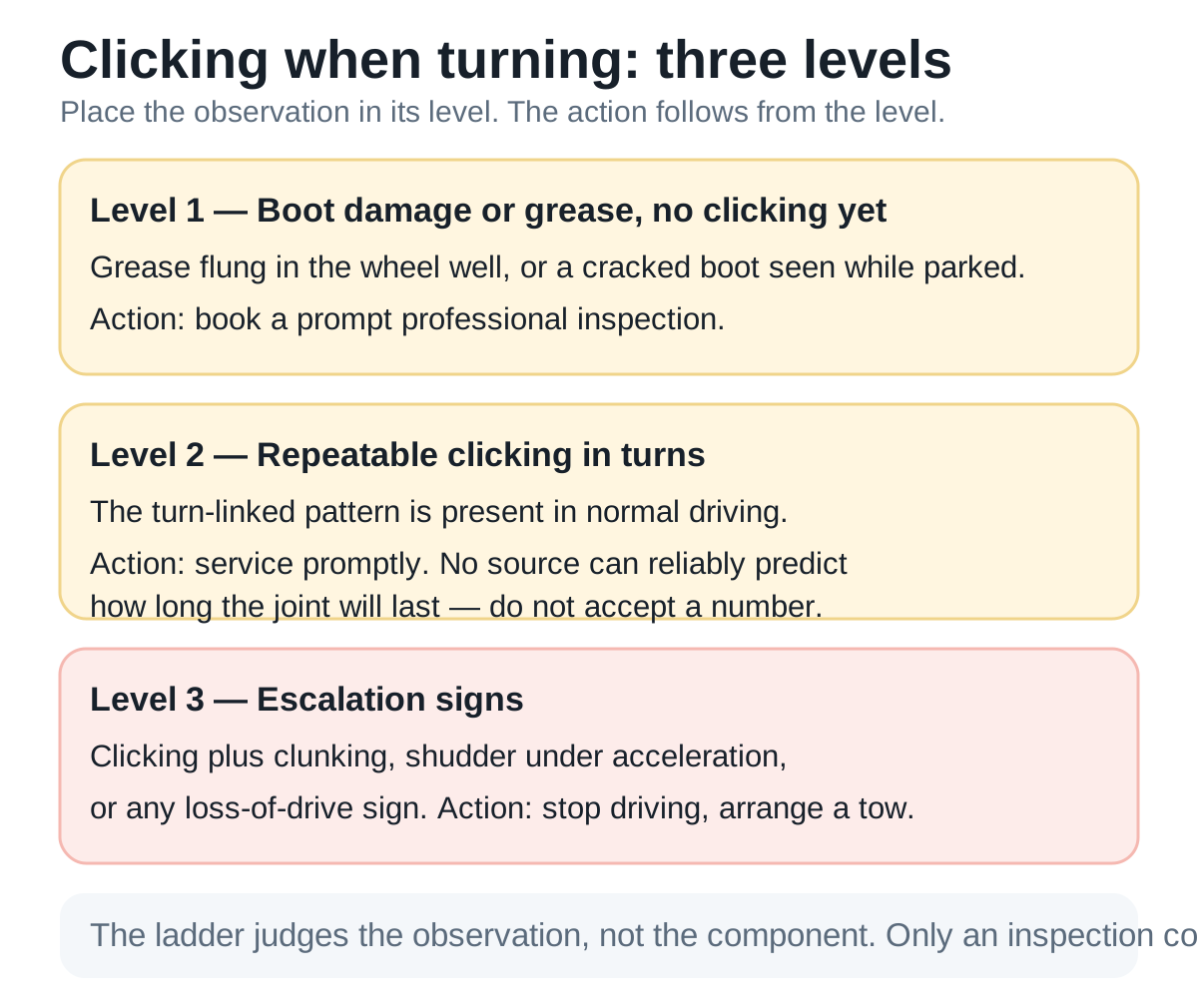
What to do depends on which of three levels you are in:
- Grease or boot damage, no clicking yet → book a prompt professional inspection. The boot is what keeps the joint alive; once it tears, wear accelerates.
- Repeatable turn-linked clicking → service promptly. Do not wait for it to "get worse first," and do not accept any number — miles, weeks, or months — for how long the joint will last. No reliable authority can give you that number, and this page will not invent one.
- Clicking plus clunking, shudder under acceleration, or any loss-of-drive sign → stop driving and arrange a tow. CARFAX's wording on a deteriorating joint: vibration at that level means it "would be prudent to keep the car parked until you can get it in for repairs," because an impaired CV joint "can fail at any time, resulting in a potentially dangerous loss of control."
Everything below is the evidence and the boundaries behind those three levels.
Confirm the pattern before you conclude anything
The clicking pattern is useful precisely because it is specific. Before applying anything on this page, check what you actually hear against the pattern — during your normal driving, not in any special test:
- Clicking appears in turns, fades or disappears driving straight: The characteristic CV pattern. Turning is when the outer joint works at its sharpest angle under load.
- Clicking is rhythmic and repeats with wheel rotation: Consistent with a rotating joint under stress, not a one-off suspension knock.
- Loudest at low speed, parking maneuvers, near full lock: Where the joint angle — and the stress on a worn joint — is greatest.
- Worse while accelerating through the turn than while coasting: Load makes a worn joint click harder; multiple expert sources describe the same behavior.
- Clicking driving straight, or a shudder when you accelerate: A different pattern. That is not this page's core case — see the escalation signs under "The three levels" below, and the exits under "When this is not your page."
- One clunk over bumps, quiet in smooth turns: Not this pattern. See "When this is not your page" below.
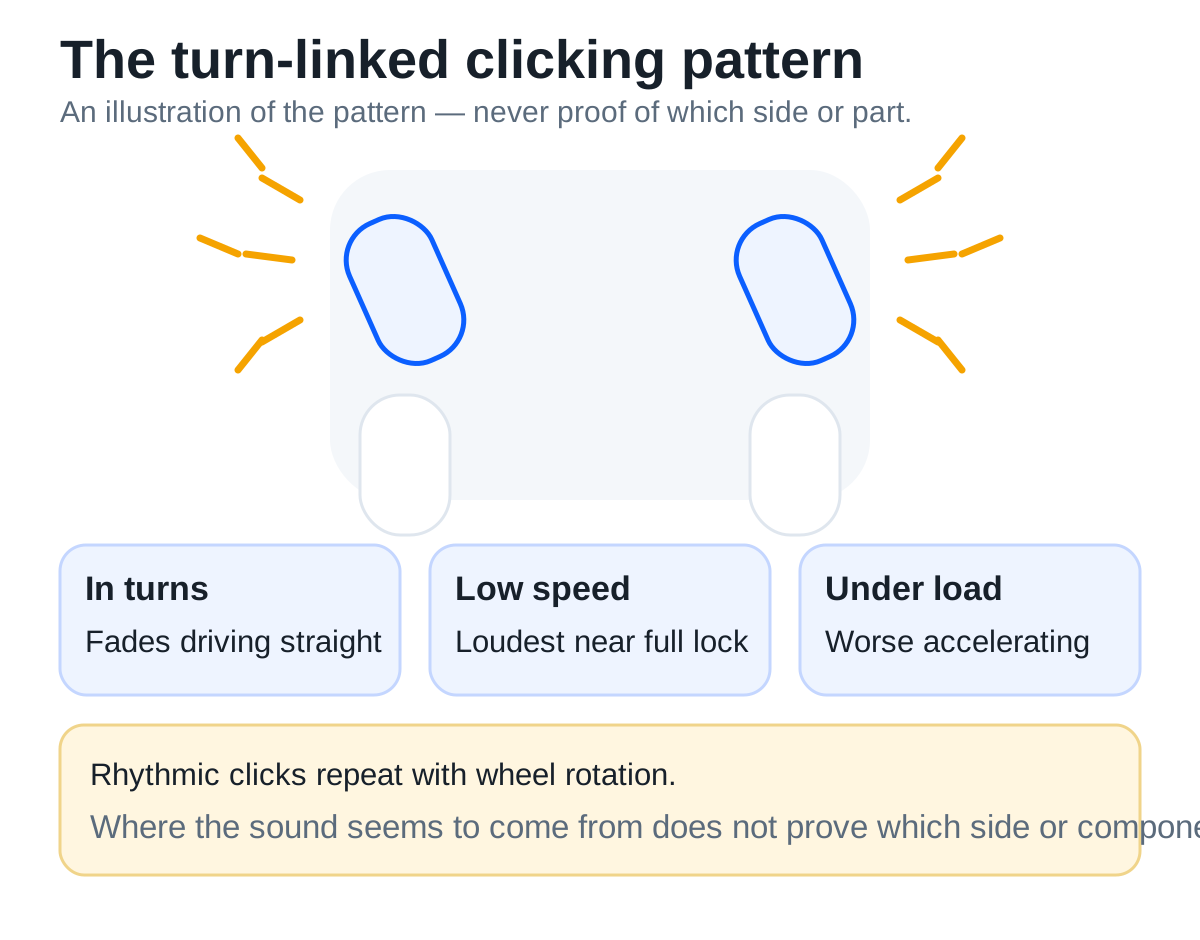
Which side is it? Treat what you hear as a clue, not a verdict. Drivers often perceive the sound as coming from one front corner, and expert sources note the noise is commonly more pronounced on the loaded side of the turn — but perceived location inside the cabin is not reliable proof of which joint is worn. That determination is the inspection's job. This page will not tell you "left turn noise means the right joint" as a rule.
Scope. This framework is built for front-wheel-drive and all-wheel-drive passenger vehicles — cars where the front wheels both steer and receive power, which is the architecture that puts a CV joint at each front wheel. If your vehicle is rear-wheel drive only, its front wheels are not driven, and a turn-locked clicking from the front is a different problem that this page does not diagnose.
What the pattern points to — and what it does not prove
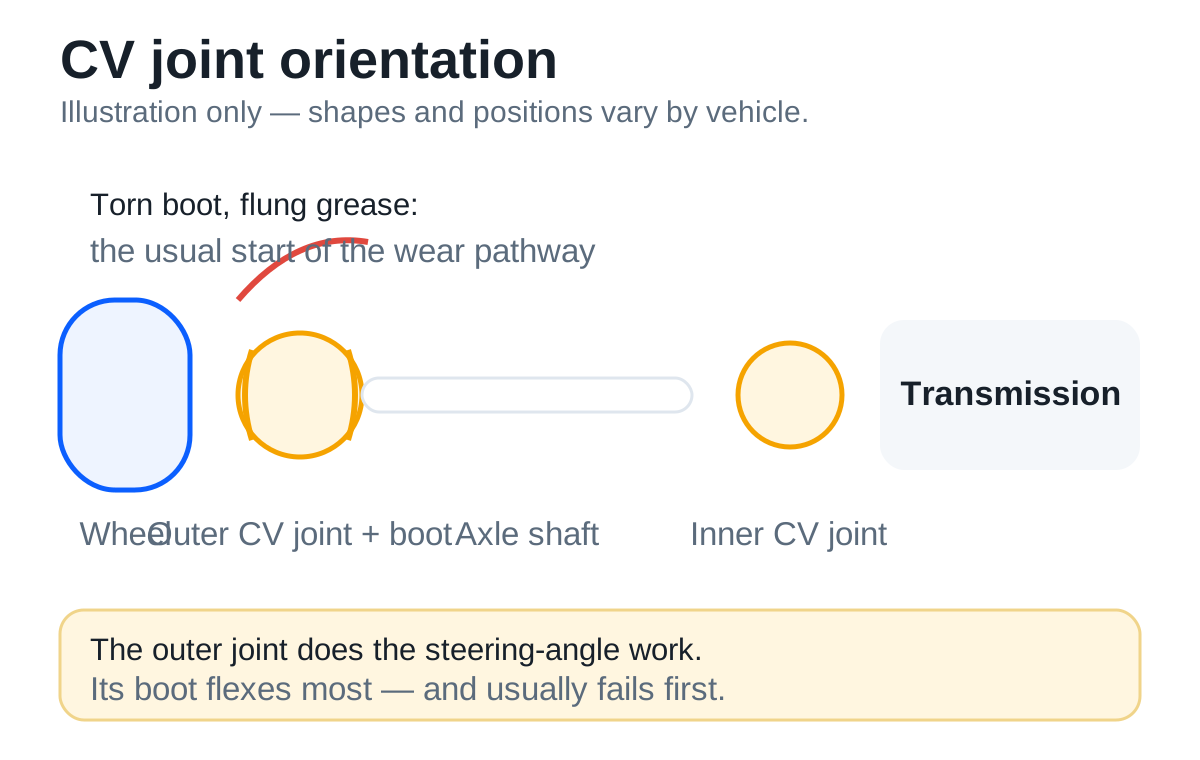
The CV joint transfers engine power to the wheel while allowing it to steer and move with the suspension. Each front axle has an outer joint at the wheel, protected by a rubber boot that keeps lubricating grease in and dirt and water out. CARFAX describes the boot's role directly: it "protects the CV joint and keeps the unit's lubricating grease from oozing out."
The failure pathway the expert sources agree on:
- The boot cracks or tears (the outer boots work hardest, because they flex the most with steering).
- Grease escapes; dirt and moisture enter.
- The joint's internal surfaces wear. In turns — maximum angle, under load — worn components no longer move smoothly, and the joint clicks.
- Once contamination begins, wear accelerates; the clicking is a sign that internal wear is already underway, not an early cosmetic noise.
That is as far as the evidence honestly goes, and two limits matter:
- A characteristic pattern is not a confirmed diagnosis. Clicking in turns is the textbook presentation of outer CV joint wear, and other front-end components rarely reproduce the same turn-dependent, rhythmic pattern — but "rarely" is not "never." Only an inspection can confirm which component is worn. This page identifies the pattern and the urgency; it does not certify the part.
- The clicking cannot tell you how worn the joint is. There is no sound-based scale from "just started" to "about to fail," and no source we rely on provides one.
The three levels: what to do
Level 1 — Boot damage or grease, no established clicking. You may encounter this first as a parked observation: grease flung inside the wheel well or around the wheel, or a cracked boot noticed during other service — safely visible, with the car parked. You do not need to get under the car to act on it, and you should not. CARFAX's guidance: cracks in the boots or leaked grease nearby mean "it's time to get the vehicle serviced before more serious repairs are required." A torn boot caught before clicking starts may mean the joint itself is not worn yet. Action: prompt professional inspection.
Level 2 — Repeatable turn-linked clicking. The pattern above is present and reproducible in normal driving. Treat the joint as worn — the wear does not reverse, and once grease and contamination are involved it accelerates — with the inspection confirming the component. Action: service promptly.
This is the level where the internet will offer you numbers: how many miles a clicking joint "usually" lasts, how many months you have. Reject them. Remaining life depends on wear state, contamination, and use, none of which can be measured from the driver's seat, and no authoritative source publishes a defensible figure. CARFAX's statement of the risk is the honest bound: an impaired CV joint "can fail at any time." A page that converts "can fail at any time" into "you have about 50–100 miles" is guessing with your safety. This page's answer to "how long can I drive on it?" is: that cannot be reliably predicted — which is exactly why the instruction is prompt service rather than a countdown.
Level 3 — Escalation signs: stop driving. Any of the following moves you out of "service promptly" and into "do not drive it there":
- Clicking joined by clunking, or the sound pattern changing materially.
- Shudder or vibration under acceleration — CARFAX links a deteriorating joint to "a distinct wobble while accelerating," and advises keeping the car parked when vibration is pronounced, because of "the potential risk of a CV joint or axle failing while driving."
- Any indication of loss of drive — the engine revs and the car does not respond normally, or drive is interrupted.
Action: stop driving and arrange a tow to the service facility. The end-stage failure these signs point toward is the joint or axle letting go, which means loss of power to that wheel and, in CARFAX's words, "a potentially dangerous loss of control."
When this is not your page
Spectpoint covers the neighboring problems on their own pages. If your main complaint matches one of these, you are in the wrong article:
- The noise happens mainly when you brake → Brake Noise. Braking sounds are a different diagnostic family.
- The steering itself feels heavy or hard to turn → Steering Wheel Hard to Turn. This page is about a sound with normal steering effort; effort is that page's territory.
- Your main complaint is vibration or humming at speed, driving straight → this page does not cover it, and will not expand into it. A straight-line, speed-linked vibration or hum has its own causes and its own inspection path at a service facility; do not use a clicking-in-turns framework on it.
- A clunk mainly over bumps or rough roads → not this pattern. Bump-linked suspension noises require a hands-on inspection (they cannot be reliably separated by sound alone), so the correct action is a prompt inspection rather than a sound-based framework.
What this page will not tell you
- No remaining-life numbers. No miles, weeks, or months — for your car or "on average." Where a number cannot be supported, this page says so rather than rounding a guess into advice.
- No repair costs. Published price ranges for CV work contradict each other too widely to be honest guidance here; your inspection produces the estimate.
- No inspection or repair procedures. Nothing here requires jacking the car up, removing a wheel, pulling a boot, or testing components by hand — and the page deliberately contains no such steps. Replacing a CV joint or axle is, in CARFAX's assessment, work "best left to a trained technician."
- No driving tests. Everything in the pattern section is observed during ordinary driving. Do not perform deliberate full-lock acceleration runs or any other maneuver to provoke the noise; if the pattern is present in normal use, that is enough to act on.
Your job as the driver is the short version: notice the pattern, place it in its level, and let the inspection confirm the component.
This page identifies a sound pattern and its urgency. Only a hands-on inspection confirms which component is worn on your vehicle.
FAQ
Is it safe to drive with a clicking CV joint?
No authoritative source gives a safe distance or time, and the risk statement that does exist is CARFAX's: an impaired CV joint can fail at any time, with potentially dangerous loss of control. That is why this page's instruction for established clicking is prompt service, and for the escalation signs in Level 3, a tow.
Can I tell which CV joint is bad from the sound?
Not reliably from the driver's seat. The sound is often perceived at one front corner and may be louder on the loaded side of a turn, but cabin perception is not proof of side. The inspection confirms the component.
It only clicks in parking lots. Is that still the same problem?
Parking maneuvers are where the pattern is characteristically loudest — maximum steering angle at low speed. A repeatable parking-lot click fits the same framework and the same "service promptly" level; the mild setting does not make the wear mild.
The clicking went away for a while. Did it fix itself?
CV joint wear does not reverse. A quieter interval does not restore grease or unworn metal; if the pattern was repeatable, the Level 2 decision stands. Do not let a quiet day talk you out of the inspection.
Both boots look fine and I still hear clicking. Does that rule out the CV joint?
No. A boot can be intact while a joint is worn, and grease evidence is not always visible from outside. The sound pattern is the primary signal on this page; visible boot damage is supporting evidence, not a required one.
Sources
Every pattern claim, quotation, and urgency statement in this article traces to the authoritative and expert sources below. Owner manuals do not document noise diagnosis, so none is cited as authority for a sound:
- CARFAX — What Is a CV Joint? — CV joint and boot function; "Clicking, popping, snapping, or clunking sounds, especially while turning the steering wheel, are sure signs of a leaky boot and probably a failing CV joint"; wobble while accelerating; vibration → keep the car parked; an impaired CV joint "can fail at any time, resulting in a potentially dangerous loss of control"; replacement best left to a trained technician. Cost figures published by that source are deliberately not used on this page. carfax.com (https://www.carfax.com/blog/what-is-a-cv-joint)
- YOUCANIC — Signs of Bad CV Joint: Sound, Symptoms, Cause — Clicking when turning, worse under acceleration; clicking at slow speeds in turns indicates the outer joints; noises driving straight point to the inner joints; shudder under acceleration; boot-crack and grease-leak pathway. youcanic.com (https://www.youcanic.com/signs-bad-cv-joint-sound-symptoms-cause/)
- CarSymp — How To Diagnose CV Joint Clicking Noise Before Axle Failure — Rhythmic, turn-dependent, torque-sensitive pattern; appears at low speeds, in sharp turns, under acceleration; louder near full lock and during parking maneuvers; distinction from wheel-bearing hum and suspension clunks. That source's remaining-mileage remarks are explicitly not adopted on this page. carsymp.com (https://carsymp.com/car-noise-diagnosis/clicking-noise-when-turning/cv-joint-clicking-diagnosis/)
- Corroborating expert consensus (validation corpus) — The turn-linked clicking pattern and its progression, observed across additional independent automotive sources during validation (NewParts, VehicleFreak, ASE-certified shop guidance).